 Home
Home
 Back
Back
Definition: The Range Calculator computes the range of a dataset, which is the difference between the maximum and minimum values, along with the maximum and minimum values themselves.
Purpose: This tool is used in statistics to measure the spread or dispersion of data, providing a simple indicator of variability.
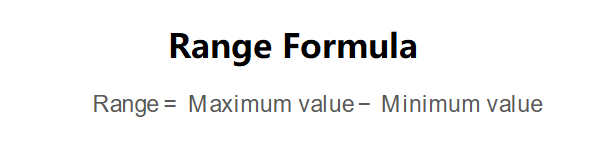
The calculator uses the following formula:
\( \text{Range} = \text{Maximum value} - \text{Minimum value} \)
Steps:
The range, maximum, and minimum values are essential for:
Example: Calculate the range, maximum, and minimum for the dataset: [45, 789, 0.5, 0.0000005, 0, 25, 1].
Q: What is the range of a dataset?
A: The range is the difference between the maximum and minimum values in a dataset, indicating its spread.
Q: Why are maximum and minimum values useful?
A: They define the boundaries of the dataset, helping to understand its extent and identify potential outliers.
Q: How is the range affected by outliers?
A: The range is highly sensitive to outliers, as it depends solely on the extreme values.